Bella ciao, Tony Bennett!

For your tireless solidarity with the Civil and Human Rights Movement! Rest in power!


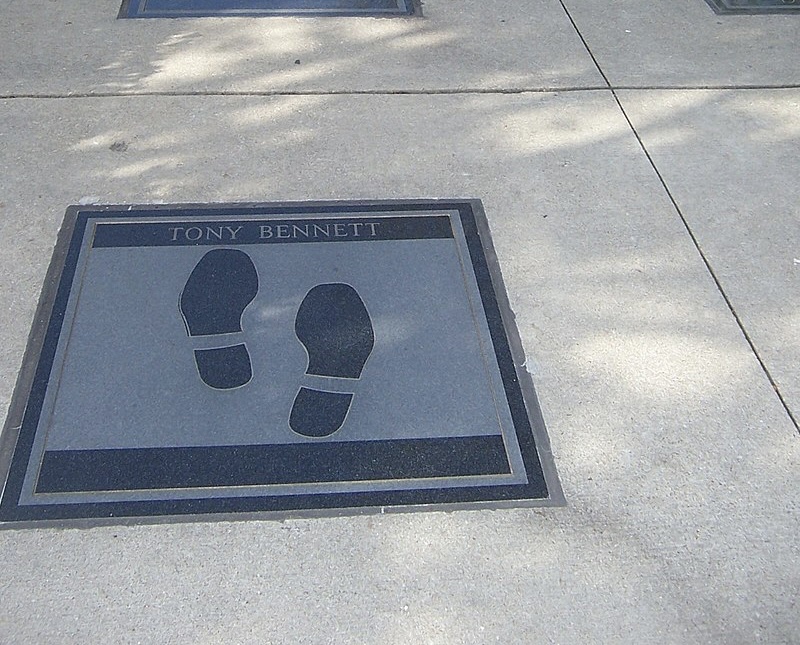
Image: A grey square with two black shoe prints and the text “TONY BENNETT” at Tony Bennett’s footprint square at the International Civil Rights Walk of Fame in Atlanta, Georgia, US.
Photo by Jonathan Schilling,
licensed under CC-BY-SA 3.0 via Wikimedia. https://creativecommons.org/licenses/by-sa/3.0?ref=openverse.
https://commons.wikimedia.org/wiki/File:Tony_Bennett_footprints_at_International_Civil_Rights_Walk_of_Fame.jpg, https://creativecommons.org/licenses/by-sa/3.0, via Wikimedia Commons.

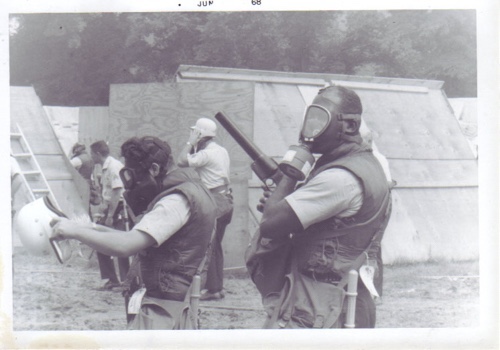
When the Blue Dragon Invaded Resurrection City, 6/23-24/1968

© Carlos Raúl Dufflar

Police enter Resurrection City on its last day.
Source: Wikipedia search

On this sovereign space stood Resurrection City, the Poor People’s Campaign/ Campaña de la Gente Pobre asking permission from our Indigenous brothers and sisters to allow the first members to have arrived at the West Potomac Park, National Mall, to remain in the City.

Six weeks of sun, rain, and mud. We would set up a model for the rest of the nation to implement a community where everyone would live together in peace and respect for all. We would have people of all races, ethnicities, backgrounds, and religions and beliefs. Since everyone will be poor, there would be no greed or envy. Our business would be to go from government agency to government agency. We would represent the poor for our interests over several concrete issues to the government of the richest country in the world.

We were a nonviolent movement of poor people guided with love and peace. We were young, old, and babies, fighting for our rights as human beings. Speaking truth to power and power were monstrous to us. We gave love to power and power was heartless. We stood with our humanity, but power was cruel to us. We struggled to break the wall of hunger, the lack of housing fit for a human being, a job, training, education, bilingual education, and justice from police brutality. Peace not war. Fishing rights, indigenous education and training, food, and self-determination for Indigenous Peoples. Food stamps. A living wage, full employment, and a guaranteed income. End to institutional racism. 

We were beautiful, proud poor people. We didn’t have any money to live. The ruling elite made it this way. We had come here to stay until they changed the negative narrative of our condition as citizens of this country. Brother FD Kirkpatrick sang the song they “Everybody’s Got a Right to Live,” No part employment, full time employment with pay.

The fearmongers had their Cold War mentality, disinformation, and round-the-clock surveillance of our City. And the infiltrators since the beginning of our Campaign, with their violent behavior, w were the agents of fear against us.

We were brothers and sisters guided with love and peace. It was our home and we were here to stay to the vet end in our Village of Hope. So when the deadline was coming soon , we stood In unity together. When dawn rose on Saturday, June 22, our Indigenous family – Chief Big Snake, George Crow Flirs High, Rose Crow Flies High, Al Bridges, Hank Adams, Mad Bear Anderson, and others proclaimed a Temporary Deed of Cession, because this was Indigenous land. The Rev. Ralph Abernathy accepted the deed and had a prayer service for us. Shortly after midnight of June 23, 1968, people were sleeping- men, women and children, seniors and young of our City – were driven from our Ciyy by tear gas by the police. But returned back to stay at their home. 

But on June 24, 1968, with a force of a thousand, the Blue Dragon invaded Resurrection City again- Metropolitan Police, Park Police, and the 116th Military Intelligence Unit. Some 20,000 US Army troops were waiting for orders to strike if we rebelled. The massive tear gas and weapons pointed at the people, bulldozers destroying our homes, burning them, brutally dragging women, seniors, disabled with a mass arrest of over 370 people. They were sent to the DC Department of Corrections to serve until July 13, 1968, and forced the remaining of us to go to Travelers Aid and issue use one-way tickets out of Washington, DC, and back where we came from. 

It was our song when they removed us:

Ain’t gonna let nobody, turn me ‘round,

Turn me ‘round, turn me ‘round,

Ain’t gonna let nobody, turn me ‘round,

I just keep on a-walkin’, keep on a-talkin’,

Marching on to freedom land.

But the Poor People’s Campaign lived on until 1969. It is our history of Resurrection City in 1968  and not the revisionist lies. 

I dedicate this to the unknown heroes with their supreme sacrifice with love, with unity, and with commitment over the feat of the Pharaoh with sickness and injustice and hatred.

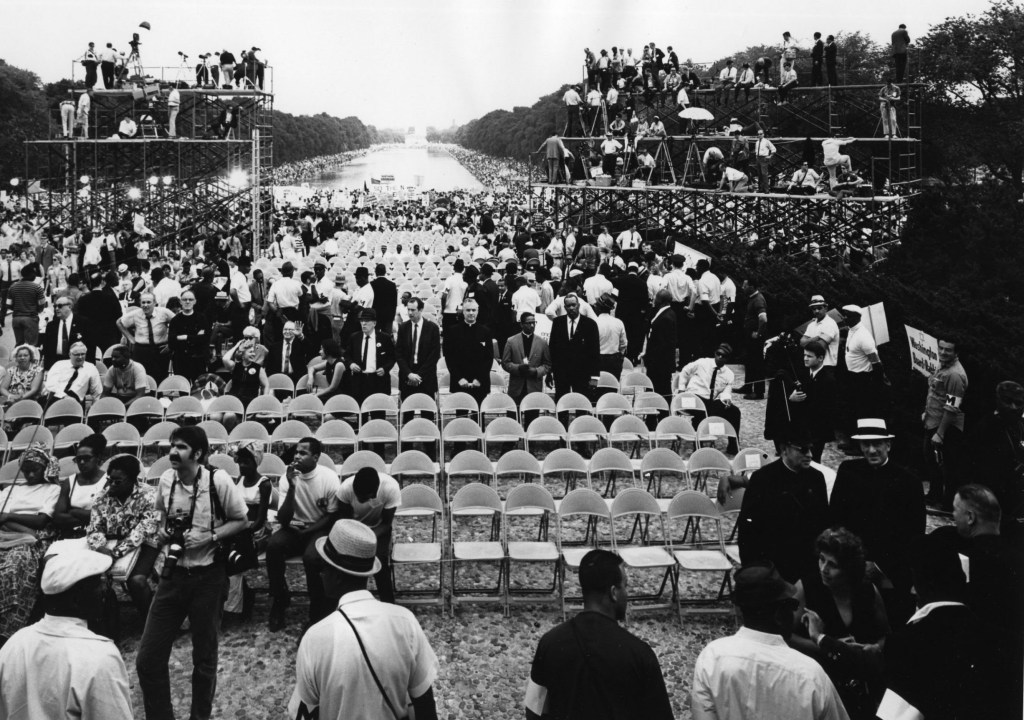
Solidarity Day, June 19, 1968

National Archives , photo no. 516368

© Carlos Raúl Dufflar & Ángel L. Martínez

Dawn has risen on this Wednesday, June 19, morning. Within eyesight of the Lincoln Monument, the Reflecting Pool and the Washington Monument. It was an unusual hot, humid day on Juneteenth, Solidarity Day.

A moment to jump in joy as they have come to support the Poor People’s Campaign. From around the country, more than a hundred thousand people with their beautiful banners:

  • Poor People’s Power
  • We Have the Right to Live
  • United Auto Workers – A Useful Job at Decent Pay
  • Wipe Out Poverty
  • UAW Supports an Economic Bill of Rights
  • Jobs and Income Now
  • A Better World is Possible 
  • No More Hunger in the USA
  • Be Real (Diggers sign)
  • East Harlem Demands Human Rights 
  • Get the Hell Out of Vietnam
  • Up Against the Wall, Motherfucker
  • The Ripon Republicans Join the Poor People’s Campaign 
  • Why Are We Poor in a Land of Plenty?
  • Welfare Rights
  • Feed the Folks
  • Justice is Our Creed
  • The Union Demands Jobs, Peace and Justice
  • Hey LBJ, How Many Children Did You Kill Today?
  • Both Parties Serve Corporations 
  • Dick Gregory for President – And I Mean Dick
  • Help the Poor to Live and Don’t Kill the Innocent People 
  • Senator Eugene McCarthy – The Peace Candidate 
  • Jews for Urban Justice 
  • Did LBJ Sign the Crime Control Bill Safe City Act of 1968?

As people were standing side by side, residents and supporters on this humid hot day, they went inside the Reflecting Pool to keep themselves cool. 

The program started with 

  • Dr. Benjamin Myers, president emeritus of Morehouse College, 
  • Dr. Wyatt T. Walker, Canaan Baptist Church of Christ (Harlem, NYC), 
  • Rabbi Jacob P. Rubin, President of the Synagogue Council of America 
  • Sterling Tucker, National Coordinator of Solidarity Day
  • Rev. James Bevel, Director of Non-violence,  Poor People’s Campaign 
  • Dorothy Height, President of the National Council of Negro Women
  • Peggy Terry, JOIN Community Union
  • Cleveland Robinson, Presiden,  Negro American Labor Council 
  • Patrick Cardinal O’Boyle, Archbishop of Washington, DC
  • Johnnie Tillmon, National Chairman, National Welfare Rights Organization 
  • Walter Reuther, President, United Auto Workers 
  • Gilberto Gerena Valentín, Congreso de Pueblos
  • Senator Edward Brooke, Massachusetts
  • Reies López Tijerina, Alianza de Pueblos Libres
  • Martha Grass, Ponca Nation, Oklahoma
  • Roy Wilikins, Executive Director, NAACP
  • Rev C.K. Steele, Vice President, SCLC
  • Rodolfo “Corky” Gonzáles, Crusade for Justice, Denver
  • Rev. Bernard Lafayette, National Coordinator, PPC
  • Whitney Young, Jr., Executive Director, National Urban League 
  • Rev. Andrew Young, Executive Vice Chairman, SCLC 
  • Mary Gurley
  • Mrs. Coretta Scott King
  • Mahalia Jackson 
  • Rev. Joseph Lowery, Chairman of the Board, SCLC
  • Rev. Dr. Ralph Abernathy, President, SCLC
  • Aretha Franklin, singing “Beaming to Heaven as I Do”
  • Rev. Jesse Jackson, Director of Operation Breadbasket, SCLC
  • Hosea Williams, Director of Direct Action, SCLC
  • Rt. Rev. John D. Bright, First Episcopal District, AME Church, NYC

As Dick Gregory speaks and said if he was elected President, he will paint the White House black and end the killings of children and mothers in the war on Vietnam. And people jumped up and sat cheering repeatedly. Senator Eugene McCarthy, the peace candidate of the Democratic Party, said that if he was elected President, he would end the war on Vietnam and restore the funding for the anti-poverty programs. Also coming to study us was Richard Nixon, Presidential candidate of the Republican Party.

When Vice President Hubert Humphrey, who was at the time the Presidential candidate of the Democratic Party, spoke out on stage saying he wanted to help the poor people, the people jumped up and said “BOO! BOO! BOO! BOO!” With the banners in the crowd: “Hell, No, We Won’t Go,” “Get the Hell Out of Vietnam,” “Peace Now,” “Bring the Troops Home Now,” and a beautiful one that said, “We Want Freedom, We Want Freedom and We Will Get Our Freedom.” (LBJ dropped out of the race on March 30, just before the start of our Campaign.)

It was a beautiful moment in my life, with so many people supporting Solidarity Day 

The artists in support of the Poor People’s Campaign were:

  • Eartha Kitt
  • Nina Simone
  • James Brown
  • Aretha Franklin
  • Lou Rawls
  • Dizzy Gillespie 
  • Louis Armstrong
  • Roberto Clemente
  • Peter, Paul & Mary
  • Buffy Sainte-Marie
  • Jimmy Collier & Rev. Frederick Douglass Kirkpatrick 
  • Pick (our resident banjoist)
  • James Baldwin
  • Harry Belafonte
  • Tony Bennett
  • Ossie Davis (Host)
  • Ruby Dee
  • Bernice Johnson Reagon
  • Allen Ginsberg
  • Burt Lancaster
  • Marlon Brando
  • Barbara Streisand 
  • Len Chandler 
  • Joan Baez
  • Odetta
  • Sidney Poitier
  • Pete Seeger
  • Leon Bibb
  • Diane Di Prima
  • Muhammad Ali
  • Jerry Lewis
  • Frank Sinatra
  • Charlton Heston
  • The Unidentified Flautist

And our leaders in Resurrection City:

  • Cornelius “Cornbread” Givens
  • Tillie Walker
  • Big Snake
  • Reies López Tijerina
  • Martha Grass
  • Rodolfo “Corky” Gonzáles
  • Hank Adams
  • George Crow Flies High
  • Al Bridges
  • Mattie Grinnell

This will last forever in my heart. It was a moment that lifted our spirits with joy as we were marching against the walls of Jericho.

https://digdc.dclibrary.org/islandora/object/dcplislandora%3A6707#page/3/mode/1up

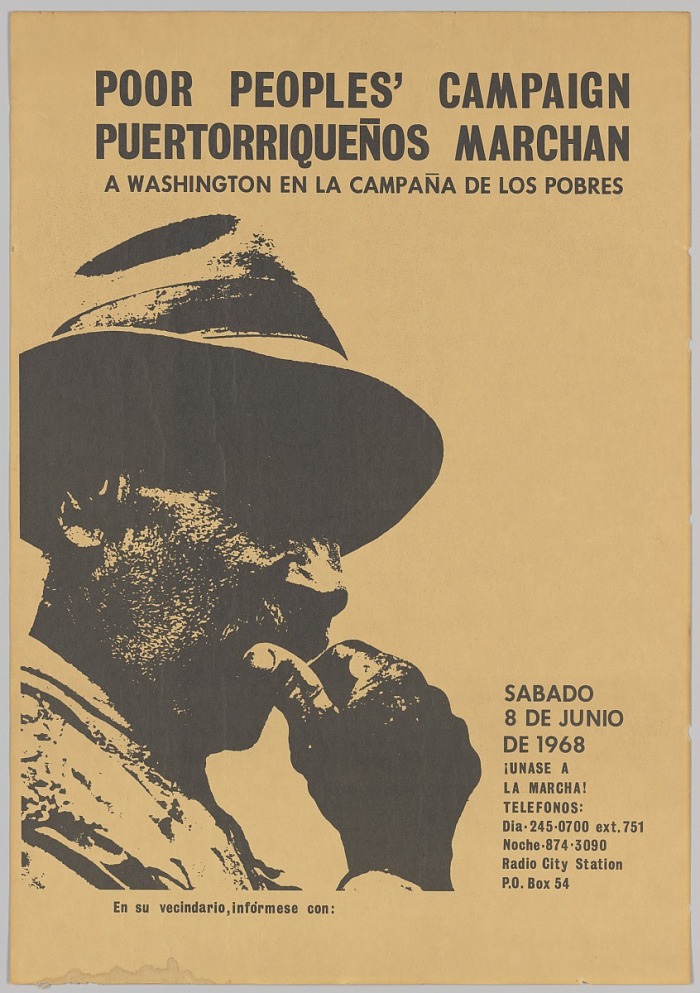
The Poor People’s Campaign – La Marcha Puertorriqueña (Spanish & English)

LA CAMPAÑA DE LA GENTE POBRE – LA MARCHA PUERTORRIQUEÑA, 15 DE JUNIO DE 1968


© Carlos Raúl Dufflar & Ángel L. Martínez

Ese sábado, 15 de junio de 1968,, 100 guaguas llegaron de Nueva York, Newark, Camden y Bridgeton, NJ, Filadelfia, Cleveland y Chicago. La voz del pueblo con su alma a la marcha del apoyo de la Campaña de la Gente Pobre en la Ciudad de la Resurrección en la Ciudad de Washington. Con los y las hermanos y hermanas negros, indígfenas, puertorriqueños, chicanos, y blancos pobres, celebraron la Fiesta Puertorriqueña en el Día de Los Puertorriqueños. Enfrente del Monumento de Washington, con alegría y canto y su bandera puertorriqueña con cien mil personas, con las demandas: trabajos, un ingreso garantizado, salud, cupones de alimentos, caserillos públicos, escuelas bilingües, justicia, y un mundo sin racismo.

Fue una marcha en demanda de una vida mejor sin pobreza y con justicia. Con sus pancartas “Justicia para los Pobres,” “Ricos: Ayúdenos de Combatir la Pobreza,” “Sin Racismo,” “Tan is Marvelous and Black is Beautiful,” “Poor People’s Power/El Poder de la Gente Pobre,” y “How Many Kennedys and Kings are Going to Die Before Something is Done for Poor People?” Los obreros campesinos de Bridgeton tuvieron con su pancarta “Better Housing for the People.” El grupo de Chicago tuvo su lo suyo para viviendas. Estuvimos de acuerdo que la pobreza no es un crimen.

Sterling Tucker (coordinador nacional de la solidaridad de la Campaña) habló sobre el Día de la Solidaridad, previsto para el 19 de junio (Juneteenth). Cuando la fiesta se terminó, la gente se fue al Cementerio a visitar las tumbas de John F. y Robert Kennedy. Se regresaron en la marcha a Resurrection City en honor del Dr. Martin Luther King Jr. Gilberto Gerena Valentín (el líder del Congreso de los Pueblos), Herman Badillo (el presidente del condado del Bronx), José Monserrate, Chief Big Snake, Reies López Tijerina, Rodolfo “Corky” Gonzáles, y el Rev. Ralph Abernathy fueron en marcha hasta el Teatro Sylvia a gozar y a bailar.

THE POOR PEOPLE’S CAMPAIGN – THE PUERTO RICAN MARCH, JUNE 15, 1968

© Carlos Raúl Dufflar & Ángel L. Martínez

On that Saturday, 100 buses arrived from New York, Newark, Camden and Bridgeton, NJ, Philadelphia, Cleveland and Chicago. The voice of the people with their soul to the march of the support of the Poor People’s Campaign in Resurrection City in Washington, DC. With Black, Indigenous, Puerto Rican, Chicano, and poor White brothers and sisters, they celebrated the Fiesta Puertorriqueña in Día de Los Puertorriqueños. In front of the Washington Monument, with joy and singing and its Puerto Rican flag with 100,000 people, with the demands: jobs, a guaranteed income, health, food stamps, public housing, bilingual schools, justice, and a world without racism.

It was a march to demand a better life without poverty and with justice, with the banners “Justice for the Poor,” “Rich People: Help Us Fight Poverty,” “Without Racism,” “Tan is Marvelous and Black is Beautiful,” “Poor People’s Power/El Poder de la Gente Pobre,” and “ How Many Kennedys and Kings are Going to Die Before Something is Done for Poor People?” Bridgeton farm workers had their banner “Better Housing for the People.” The Chicago group had their banner housing. We agreed that poverty is not a crime.

Sterling Tucker (the Campaign’s national solidarity coordinator) spoke about Solidarity Day, scheduled for June 19 (Juneteenth). When the festival was over, people went to the Cemetery to visit the graves of John F. and Robert Kennedy. They marched back to Resurrection City in honor of Dr. Martin Luther King Jr. Gilberto Gerena Valentín (the leader of the Congress of the Peoples), Herman Badillo (the Bronx Borough President), José Monserrate, Chief Big Snake, Reies López Tijerina, Rodolfo “Corky” Gonzáles, and Rev. Ralph Abernathy marched to the Sylvia Theater to enjoy and dance.

Note: Día de Los Puertorriqueños was postponed from the original date listed on the flyer. Image shows a male Puerto Rican elder in straw hat in a pensive position, with text provoking information about the event.

On the Road to Día de Los Puertorriqueños

As the National Puerto Rican Day weekend has just concluded, let’s acknowledge the links between the present-day season of Puerto Rican parades and festivals and the original Poor People’s Campaign. Stay tuned for an account of Día de Los Puertorriqueños at Resurrection City (15 June 1968) here later this week!

Resurrection City, May 13, 1968

© Carlos Raúl Dufflar

From north to east, from east to west, the call that lifted the heart and soul de la Campaña de la Gente Pobre/Poor People’s Campaign. The seed that grew into a tree branch from the Atlantic to the Pacific. Indigenous, Black, Puerto Rican and Chicano, and Appalachians/poor White workers, we all had in common that we were all poor.

The Nine Caravans on our long journey on buses, on trucks, on cars, mule-driven wagons, and on foot, picking up people along the way and holding rallies. We were women, men, seniors and disabled, children and youth, and students. In which a beautiful baby boy was born to Annie Rogers Chambers.

We were guided with love and consciousness. We were deeply committed to nonviolence was our weapon. Along the way, under the seeing eyes and stoolpigeons since the Caravans began,, we were met with beatings, arrests and police brutality. But we kept our spirits strong with our songs. The National Chorus of the Poor sang “Ain’t nobody is gonna turn us around. We’re gonna keep on marching, keep on talking, until we get to freedom land.” 

The Freedom Train of people from Memphis and Marks, Mississippi, were the first to arrive on this sacred ground of the National Mall, West Potomac Park, between the Washington Monument and the Lincoln Memorial, besides the Reflecting Pool. Resurrection City was born on this Monday, May 13, 1968. As the leaders of the Poor People’s Campaign asked permission for use of this land from Linda Arako from the Cree Nation, she gave us our blessing. And our allies were the Diggers. 

A beautiful new dawn rose, building A-frame houses out of plywood and plastic. People cried out, “Freedom! Freedom! Freedom!” Then came the negative narrative of corporate America that we were a shantytown. It was our home sweet home. 

The Southern Caravan, the Mule Train, the Midwest Caravan , the Indian Trails, the Appalachian Trails, the Western Caravan from San Francisco and Los Angeles, and the Northeastern Caravan, which it took nine days journey, picking up people and rallying, soon we arrived and we were organizing a three-person team building each of our homes. Since we were veterans of the struggle and of being organizers, we were guided with discipline. 

Resurrection City USA, had a population of 5000 people. It didn’t matter where you came from: No landlords, no rent, no bills, no police brutality, and no jails. We shared and we learned from each other. We had guests from the Freedom Movement to show support to us: Rap Brown (Chairman of the Student Nonviolent Coordinating Committee) and Stokely Carmichael. We were also visited by actor Sidney Poitier, singer James Brown, and People’s Champion Muhammad Ali. Also there was Eric Maristany, a photographer and neighbor from El Barrio.

It belonged to us. We had a City Hall. We had our own ZIP code 20013, telephones, Coretta King Day Care Center, God’s Eye Bakery (Free Bread Forever), a food tent, a Freedom School, a free general store, and a Malcolm Shabazz Study Center. And the Hunger Wall “Tell it like it is” with beautiful words of Martin and Malcolm, Cuba Libre, Sisters of Watts. Somos Unidos.

A medical and dental clinic. Women’s and men’s showers. A free telephone booth.

Our own newspaper True Unity News (& also Soul Force). A community center was our meeting place. No matter what your religion or philosophy, let us unite mano a mano in the spirit of Resurrection City. 

And each morning , we would greet our neighbors with “Good morning, Brother or Sister.” We would have breakfast at God’s Eye Bakery with whole wheat bread with butter or jam or peanut butter. 

We then listen to the news and then walk over to the front gate, waiting for the people to line up and march to the Department of Agriculture and Department of Labor to petition and lobby. Chief Big Snake, Tillie Walker, Hank Adams, Mattie Grinnel, Reies López Tijerina, Cornbread Givens, Corky Gonzales, Gilberto Gerena Valentín, Clyde Warrior, Jimmy Collier, Rev. Frederick Douglass Kirkpatrick, Rose Crow Flies High, George Crow Flies High, Annie Chambers, Ralph Abernathy, Al Bridges, Andrew Young, Hosea Williams, Jesse Jackson, Collin Harris, Peggy Terry, Martha Grass, Robert Fulcher, Bill Rodríguez, Anabel Soliban, Herman Giridilo, Eisie Snake, Victor Charlo, Robert Dumont, Della Warrior, and others were present. 

We marched for food stamps to feed the hungry people and a guaranteed income. To the State Department to demand an end to the war, for there many poor people dying in the War in Vietnam. To the Justice Department to bring justice to the people and hold them accountable for police brutality. Marching the Indigenous Contingent with Chief Falling Wind, and many others, petitioning for their fishing rights, for schools, for education, for housing and for food, at the Supreme Court and the Bureau of Indian Affairs. To the Department of Health, Education and Housing by the Puerto Rican Contingent for demanding bilingual education, housing, jobs and self determination for Puerto Rico. The Chicano Contingent with Tijerina and Gonzales demanding for the Treaty of Guadalupe Hidalgo land rights, education, housing, and an end to police brutality. We also visited the Office of Equal Opportunity. 

We marched and lobbied, but it wasn’t a pretty picture because we were met with brutality. We were guided with conscious love. 

We would return back home after marching and lobbying and we would gather around with our neighbors and sing. We listened to the songs of Kirkpatrick and Collier. We would gather by the barrel where we buried wood to keep us warm. Even with mud or rain or sunshine, it was still our home.

The politics of fear and warmongering did not respect our rights as citizens to petition the government of our First Amendment rights. The Omnibus Crime Control and Sate Streets bill had just become law in 1968 because now we were the Poor Menace. We were no longer invisible in the eyes of US society.

We were the Poor People’s Campaign/ Campaña de La Gente Pobre from May 12, 1968, to June 24, 1968. As Brothers Frederick Douglass Kirkpatrick and Jimmy Collier sang, that everybody has a right to live as we were marching down the streets of Washington, DC, with our demands and banners:

 “¡El Poder de la Gente Pobre!/Poor People’s Power!” In a land of plenty while we’re poor.

To shame America for the way it treats poor people, contaminated with apartheidism, and we are good to let the whole world know how they treat poor citizens as we march for human rights/ en la marcha for derechos humanos. 
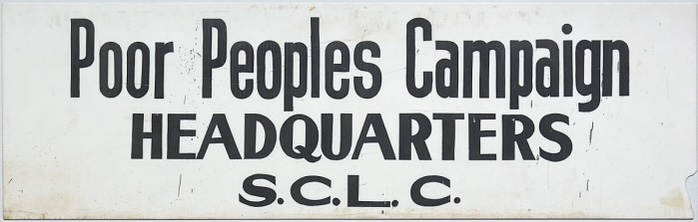
The Committee of 100

Sign used at PPC HQ, 14th & U Streets, Washington, DC.

From the Collection of the Smithsonian National Museum of African American History and Culture, Gift of Walter C. Thaxton.
(Public Domain CC0 1.0)

© Carlos Raúl Dufflar

On this Monday, 29th April 1968, the Committee of 100 had traveled from all around the country. The National Poor People’s Steering Committee of the Poor People’s Campaign, made up of Indigenous, Blacks, Puerto Ricans, Chicanos, and poor Appalachian Whites, arrived in Washington, DC, with our passion and demands.

For a three-day schedule, for marching and lobbying, to the different departments of government, to lift our voice, and to the Senate Committee on Manpower, Employment and Poverty. We presented an Economic Bill of Rights for the Full Employment Act of 1964, and repeal the 90th Congress’ 1967 Social Security Act, and the rights of farm workers to form a union under the National Labor Relations Act.

.

¡Happy International Workers’ Day (May Day)! ¡Feliz Día Internacional de Trabajo (1 de mayo)!

But the gentry must come down
and the poor shall wear the crown
Stand up now, Diggers all”

Barnstormer 1649, “March of the Levellers / The Diggers Song / The World Turned Upside Down”
With acknowledgment to the Diggers, conrades of the original Poor People’s Campaign of 1968, and their spiritual ancestors, the original Diggers of 1649. Remember them all on this international holiday!

¡Feliz Día de Los Reyes! ¡Happy Three Kings Day!

January 6 is the day of the international cultural heritage called Día de Los Reyes -Three Kings Day. Poor People’s Embassy commemorates the struggles of the Puerto Rican people of El Barrio – East Harlem, New York, that to this day have made the annual commemoration of this holiday possible.
Poor People’s Embassy also on this Day salutes the Puerto Rican Contingent of the original Poor People’s Campaign and organizer Gilberto Gerena Valentín. Also, Saludos to comrades in PPC who stood in solidarity: Reies Lopez Tijerina, Rodolfo “Corky” Gonzáles, Cornelius “Cornbread” Givens, Tillie Walker, Hank Adams, Clyde Warrior, Big Snake, Rev. Frederick Douglass Kirkpatrick, and many others.

Carlos Raúl Dufflar of Original PPC honored at New Years 2023 Event